
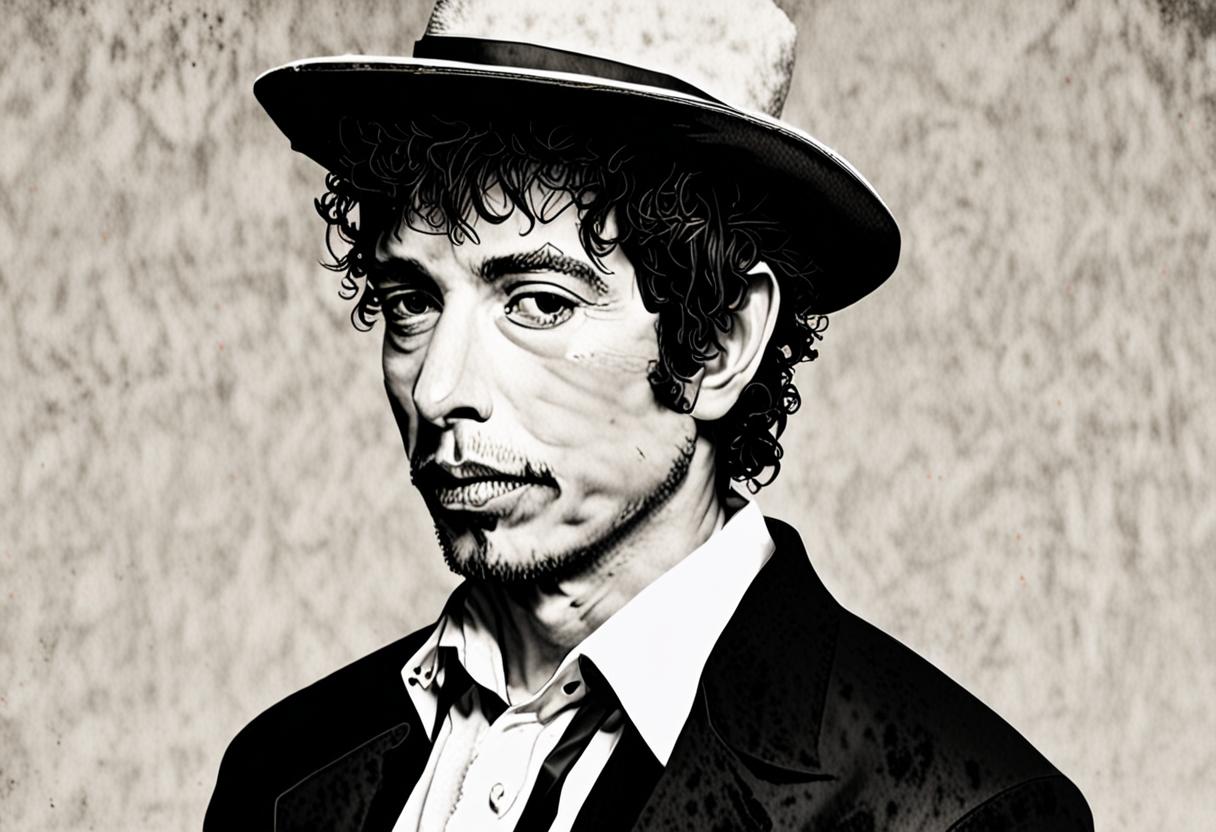
On December 10, 2016, the Swedish Academy held one of the most anticipated cultural events of the decade: the conferral of the Nobel Prize in Literature to Bob Dylan. Except Dylan wasn’t there.
His physical absence became the moment. It reframed the ceremony, the award, and even the idea of artistic legitimacy. In the end, the empty chair spoke louder than any acceptance speech.
A Reluctant Laureate
When the Nobel announcement first landed in October 2016, Dylan’s reaction was—predictably—opaque. He offered no immediate statement, making headlines simply by doing nothing. The world projected onto him: indifference? shyness? annoyance? Dylan stayed silent.
When he later acknowledged the award, he did it in his trademark, sideways fashion—respectful but distant, as if the prize belonged to another universe altogether.
By the time of the ceremony, it became clear: he would not attend. “Other commitments,” he said. A line simple enough to irritate traditionalists and delight anyone who understood the profound irony of the folk hero refusing to play the role assigned to him.
An Acceptance Speech Without the Man
Instead, the speech was read aloud by Azita Raji, the U.S. ambassador to Sweden. Dylan eventually sent a long-form Nobel lecture, a wandering reflection on literature, Homer, Moby Dick, and the strange ecosystem where songs and stories shape identity.
It was pure Dylan: elliptical, self-mythologizing, deeply considered, and allergic to convention.
His absence was not a rejection of the honor. It was the most Dylan-esque way of accepting it—from afar, on his own terms, in a way that forced the audience to engage with the art rather than the artist.
A Lifetime of Being Elsewhere
To understand Dylan’s decision, you have to look back at his history:
- He resisted being the “voice of a generation” in the 1960s.
- He sidestepped political hero worship by turning electric at Newport.
- He disappeared after his motorcycle accident in 1966, letting absence become part of the legend.
- He reinvented himself endlessly—Christian gospel singer, traveling bard, grizzled poet of the Never Ending Tour.
Dylan has never been where people expect him to be. The Nobel ceremony was no exception—it was continuity, not rebellion.
The Cultural Shockwave
The Nobel Committee faced criticism: awarding a songwriter? Breaking tradition? But others saw it as overdue recognition for the poetic architecture of modern songwriting.
The absence amplified the message:
Art belongs to everyone, not to institutions.
Dylan receiving the Nobel expanded the borders of literature; Dylan skipping the ceremony shattered whatever was left of the old definition.
A Final Twist: Presence Through Absence
In the end, Dylan’s nonattendance didn’t diminish the ceremony—it defined it. The empty chair became a symbol of:
- creative autonomy
- the refusal to be packaged
- the mythic distance that Dylan cultivates
- the continued interrogation of what literature even means
Dylan has always been a man who walks sideways through history. Even as he accepted one of the world’s most prestigious honors, he managed to stay—characteristically—somewhere else.
His final speech closes the loop:
“Songs are unlike literature. They’re meant to be sung, not read.”
And yet, on that stage in Stockholm, his words—spoken by someone else—echoed through the hall with the weight of a man who has spent his life resisting labels, even the most flattering ones.