
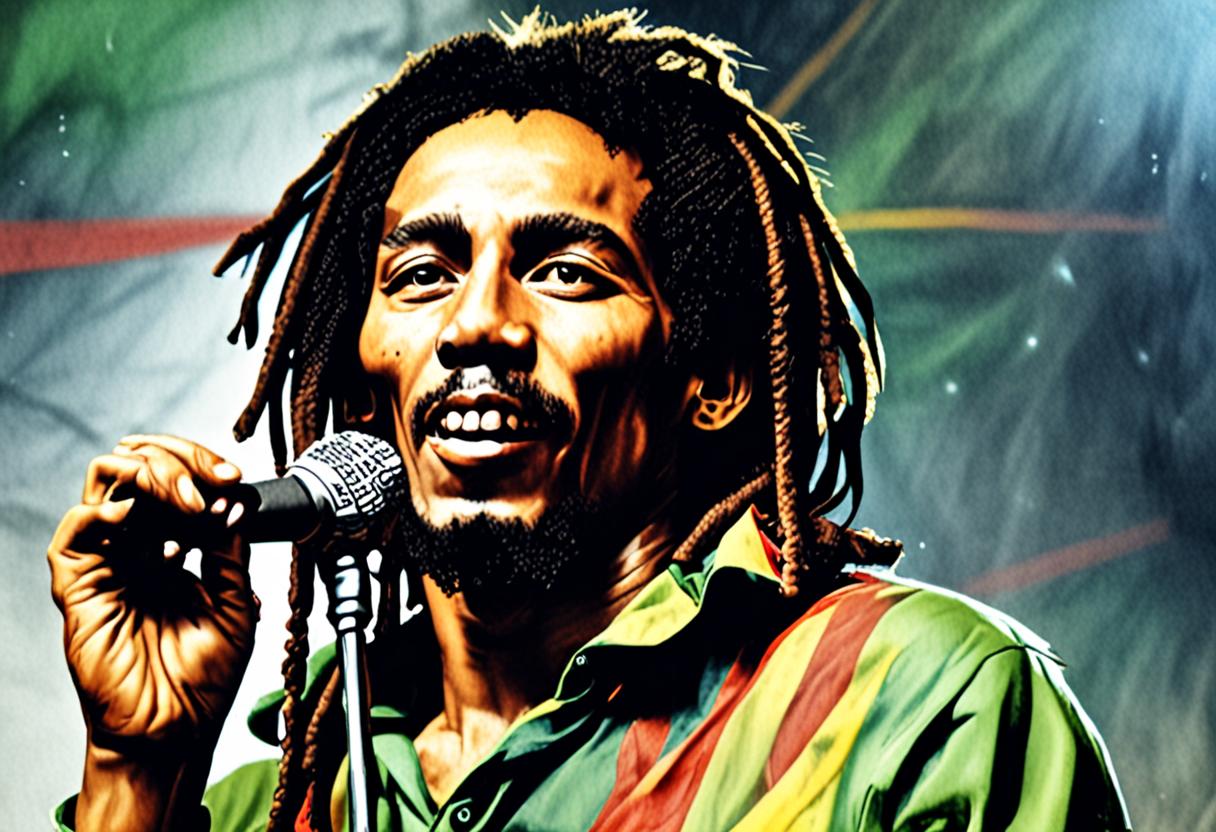
On February 6, 1945, in the serene village of Nine Mile, Jamaica, Robert Nesta Marley was born—a man destined to become the voice of a nation and the heartbeat of a global movement. Today, as we commemorate what would have been his 81st birthday, we reflect on the indelible mark he left on music, culture, and the collective consciousness of humanity.
Career Highlights
Marley’s musical odyssey began in the early 1960s when he formed The Wailers alongside Peter Tosh and Bunny Wailer. Their fusion of ska, rocksteady, and reggae rhythms laid the foundation for a genre that would captivate the world. The release of ‘Catch a Fire’ in 1973 marked their international breakthrough, introducing audiences to the raw energy and profound messages embedded in their music.
Albums like ‘Exodus’ (1977) and ‘Uprising’ (1980) showcased Marley’s evolution as an artist and a visionary. ‘Exodus’ was named ‘Album of the Century’ by Time magazine, a testament to its enduring impact. Songs like ‘One Love,’ ‘No Woman, No Cry,’ and ‘Redemption Song’ became anthems of hope and resistance, transcending cultural and geographical boundaries.
Personal Journey
Marley’s life was a tapestry woven with threads of diverse experiences. Born to a white Jamaican father and a Black Jamaican mother, he navigated the complexities of identity in a society marked by racial divisions. His embrace of the Rastafari faith in the late 1960s profoundly influenced his music and worldview, infusing his lyrics with themes of spirituality, social justice, and African unity.
Despite facing personal and political challenges—including an assassination attempt in 1976—Marley’s commitment to his message never wavered. He once said, ‘My music will go on forever. Maybe it’s a fool say that, but when me know facts me can say facts. My music will go on forever.’ This conviction propelled him to use his platform to advocate for peace and equality.
Cultural Impact
Marley’s influence extends far beyond his discography. He became a symbol of resistance against oppression and a beacon for the marginalized. His music played a pivotal role in popularizing reggae worldwide, bringing Jamaican culture to the forefront of the global stage.
Posthumously, Marley’s legacy continues to thrive. The Bob Marley Museum in Kingston stands as a pilgrimage site for fans, preserving his memory and contributions. His children, notably Ziggy, Damian, and Stephen Marley, have carried the torch, ensuring that the Marley name remains synonymous with musical excellence and activism.
As we celebrate Bob Marley’s 81st birthday, we are reminded of the power of music to inspire change and unite people across divides. His melodies and messages remain as relevant today as they were decades ago, a testament to the enduring spirit of a man who sang for freedom, love, and justice.