
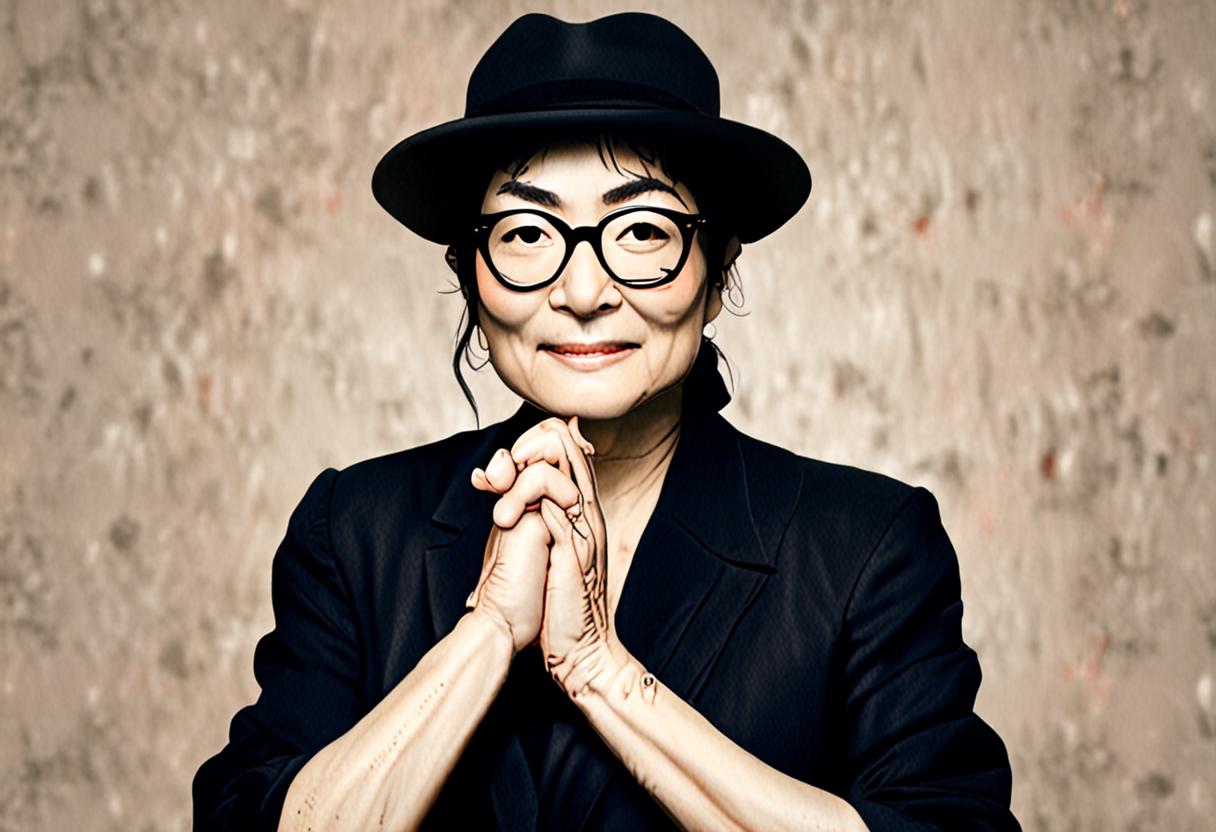
On February 18, 2026, we celebrate the 93rd birthday of Yoko Ono, a visionary artist whose multifaceted career has left an indelible mark on the worlds of art, music, and activism. From her avant-garde beginnings to her enduring influence on contemporary culture, Ono’s journey is a testament to the power of imagination and resilience.
Career Highlights
Yoko Ono’s artistic journey began in the 1950s, immersing herself in New York’s avant-garde scene. Her 1964 book, “Grapefruit,” is a seminal work in conceptual art, featuring “event scores” that invite readers to engage in imaginative acts, blurring the lines between artist and audience. This interactive approach became a hallmark of her work, emphasizing participation and the ephemeral nature of art.
In the realm of music, Ono’s 1970 debut album, “Yoko Ono/Plastic Ono Band,” showcased her experimental vocal techniques and innovative soundscapes. Tracks like “Why” and “Greenfield Morning I Pushed an Empty Baby Carriage All Over the City” challenged conventional music norms, laying the groundwork for genres like punk and new wave. Her 1981 single, “Walking on Thin Ice,” not only became a dance hit but also marked a poignant moment, as it was the last song she and John Lennon worked on before his untimely death.
Ono’s influence extended into the 21st century with the release of “Warzone” in 2018, where she revisited and reimagined songs from her extensive catalog, reflecting on themes of peace and social justice. This album underscored her enduring relevance and commitment to addressing contemporary issues through art.
Personal Journey
Born in Tokyo in 1933, Yoko Ono’s early life was marked by both privilege and hardship. Her family’s displacement during World War II exposed her to the harsh realities of conflict, shaping her lifelong dedication to peace. Moving to New York in the 1950s, she became a central figure in the avant-garde community, collaborating with artists like La Monte Young and George Maciunas, and becoming a key member of the Fluxus movement.
Her relationship with John Lennon, beginning in the late 1960s, was both a personal and artistic partnership. Together, they embarked on numerous peace campaigns, including the famous “Bed-Ins for Peace” in 1969, using their celebrity status to advocate for an end to the Vietnam War. Their collaborative works, such as the “War Is Over!” campaign, remain iconic symbols of activism through art.
Following Lennon’s tragic death in 1980, Ono continued to honor his legacy while forging her own path. She established the LennonOno Grant for Peace and the Imagine Peace Tower in Iceland, both serving as beacons for her unwavering commitment to global harmony.
Cultural Impact
Yoko Ono’s impact on culture is profound and multifaceted. Her pioneering work in conceptual art and performance has inspired countless artists to explore the boundaries of creativity. Pieces like “Cut Piece,” where she invited the audience to cut away her clothing, challenged perceptions of vulnerability, trust, and the role of the artist.
In music, her avant-garde approach and experimental techniques have influenced a diverse range of musicians, from punk rockers to electronic artists. Her collaborations with contemporary bands and her success on dance charts in the 2000s highlight her ability to transcend genres and generations.
Ono’s activism, particularly her advocacy for peace and women’s rights, has left a lasting legacy. Her art often serves as a call to action, encouraging viewers to envision and work towards a better world. As she once stated, “A dream you dream alone is only a dream. A dream you dream together is reality.”
As we celebrate Yoko Ono’s 93rd birthday, we honor not only her artistic achievements but also her unwavering dedication to using art as a tool for social change. Her life’s work continues to challenge, inspire, and resonate, reminding us of the transformative power of creativity and imagination.