
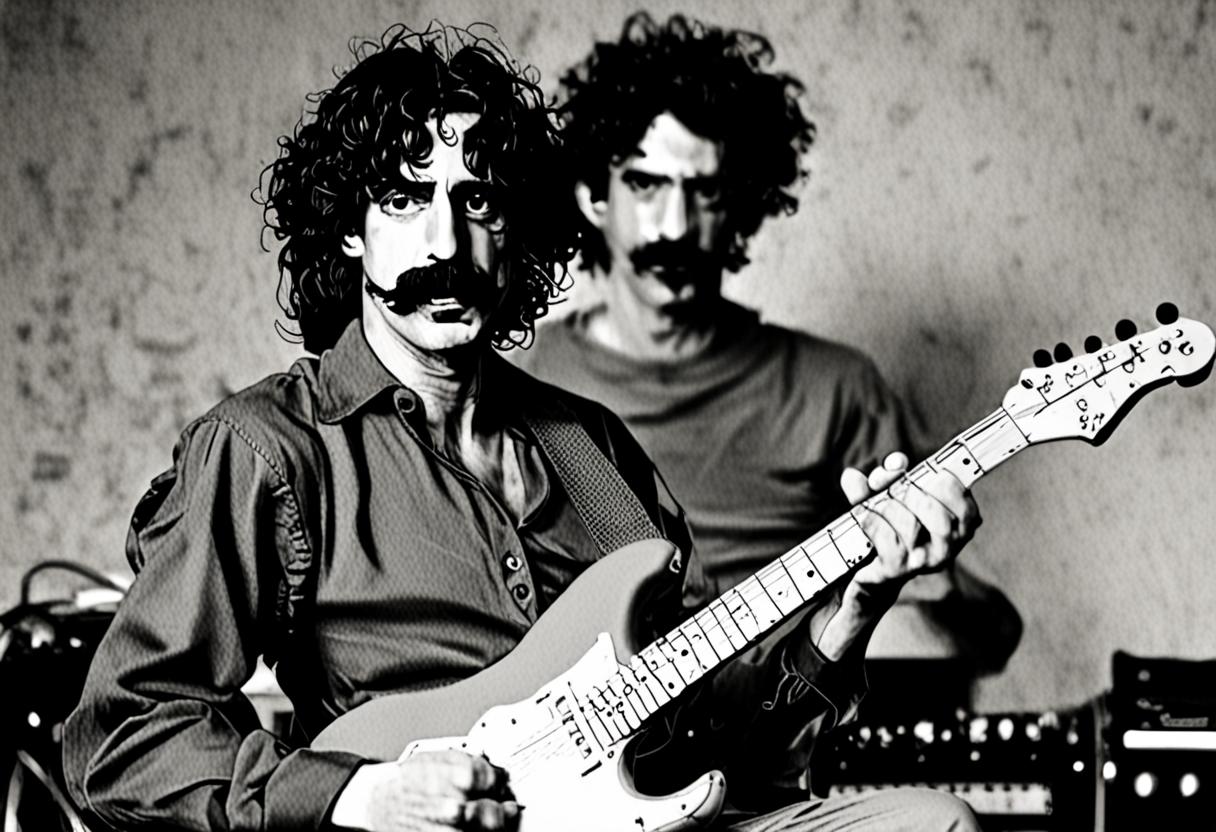
Frank Zappa’s death on December 4, 1993 marked the end of one of the most uncompromising and restlessly creative careers in 20th-century music. At 52, after a long battle with prostate cancer, Zappa died in his Los Angeles home surrounded by family.
“Composer Frank Zappa left for his final tour,” the family wrote — a typically wry and fitting epitaph for an artist who rejected sentimentality and embraced confrontation, curiosity, and skepticism as artistic principles.
A Life Built on Creative Defiance
Born in Baltimore in 1940 and raised primarily in California, Zappa displayed early fascinations with chemistry, satire, and the dissonant worlds of classical modernism. It was Edgard Varèse — the French-American avant-garde composer — who became Zappa’s lifelong beacon. Varèse’s belief in “organized sound” shaped Zappa’s approach to composition more deeply than any rock influence.
In 1966, Zappa introduced the world to The Mothers of Invention with Freak Out!, one of the first double albums in rock history and a manifesto of his philosophy — rock filtered through social critique, orchestral ambition, and absurdist theater. It established Zappa as an outsider who operated with the rigor of a classical composer and the irreverence of a cultural saboteur.
Expanding the Vocabulary of Music
Zappa was never interested in fitting into the industry he constantly mocked. His discography — more than 60 albums released during his lifetime — moves between:
- orchestral works
- big-band satire
- mutated doo-wop
- political spoken word
- electronic experimentations
- virtuosic guitar suites
No two projects shared the same logic, except one: Zappa’s total rejection of creative compromise.
He treated the studio as a laboratory, pioneering techniques in overdubbing, tape manipulation, complex rhythmic layering, and extended guitar improvisation. He was also one of the first major artists to embrace digital recording systems, expanding his palette long before the mainstream understood their potential.
A Cultural Critic Disguised as a Rock Star
Zappa’s work often provoked controversy, although never for the reasons critics expected. His sharp satirical lens targeted conformity, censorship, consumer culture, political hypocrisy, and the illusions of the entertainment industry.
When the PMRC (Parents Music Resource Center) pushed for censorship and “warning labels” on records in the 1980s, Zappa emerged as one of the committee’s most articulate and unrelenting opponents, testifying before Congress with razor-sharp clarity.
His political bravery matched his musical daring. Zappa challenged institutions not out of rebellion for its own sake, but out of an intellectual and ethical commitment to creative freedom.
Final Years and Legacy
Even as cancer progressed, Zappa continued to compose, shifting toward large-scale orchestral pieces and computer-assisted synthesis. His final project, The Yellow Shark (1993), performed by the Ensemble Modern, stands as one of his most accomplished and emotionally direct works — a culmination rather than a farewell.
Today, Zappa’s legacy is vast:
- a monumental catalog preserved by The Zappa Family Trust
- generations of musicians inspired by his complexity and independence
- a symbolic role as one of the fiercest defenders of artistic autonomy
Frank Zappa did not simply resist categorization — he dismantled the need for it. Three decades after his death, his music remains an open challenge to complacency, and an invitation to think, question, and innovate.