
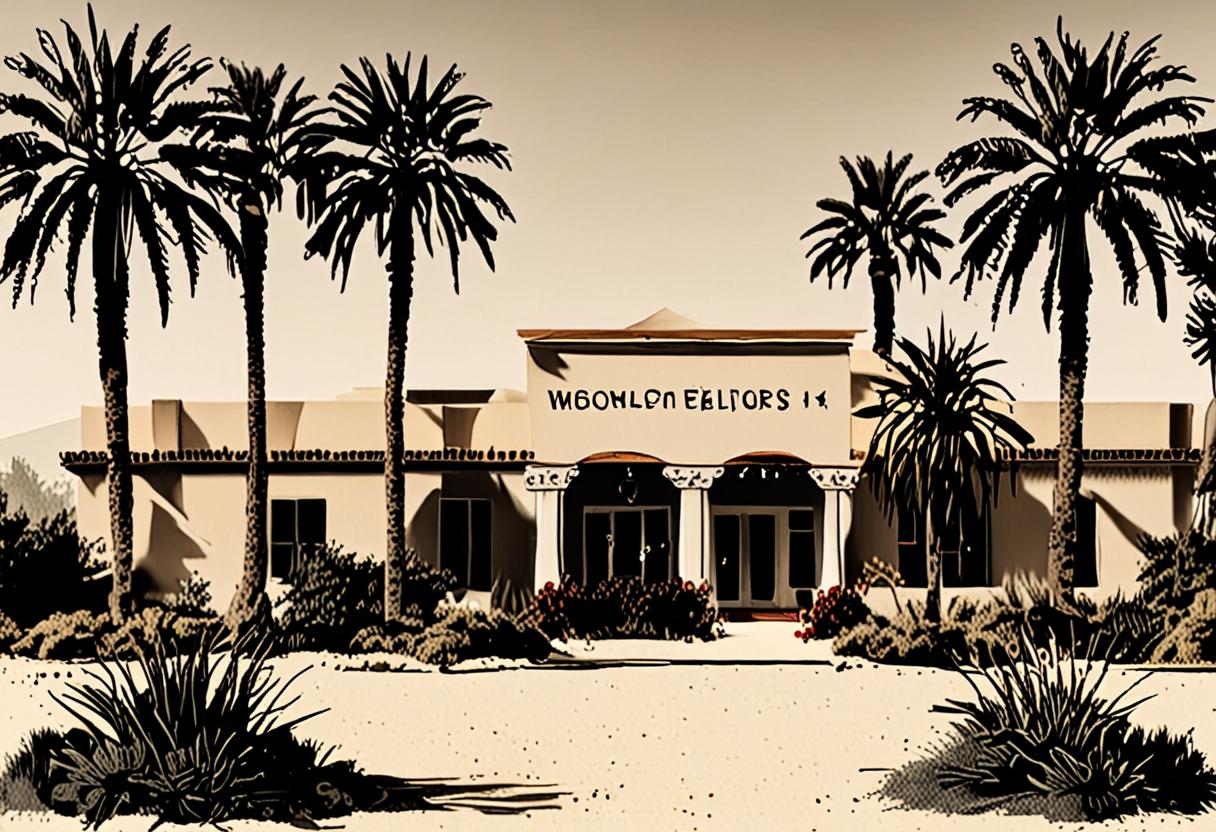
There are albums that become classics, and then there are albums that become landscapes.
Hotel California, released in December 1976, belongs firmly to the second group.
It’s not just the Eagles’ fifth studio record — it’s a compass point, a symbolic place, a myth the band conjured almost accidentally, only to watch it take on a life of its own.
From the opening arpeggio of the title track, a strange clarity sets in.
The sound is warm, familiar, Californian, and yet something’s off — an undercurrent of unease, like a dream slipping into a fever. The Eagles had already mapped the American dream. Here, they start charting its shadow.
A Record Born in the Wreckage of Success
By 1976, the Eagles were a band under pressure: enormous fame, internal tension, relentless touring, the growing machinery of the music industry pressing down on them.
And out of that pressure came Hotel California, an album obsessed with temptation, excess, and the slow-motion unraveling of idealism.
The lyrics cut with surgical irony.
The harmonies, always immaculate, feel stretched thin at the edges.
The arrangements shimmer even when the stories they carry are exhausted, suspicious, or lost.
It’s a record that looks straight at fame and asks: Was this what we meant to build?
The Title Track: A Short Story Disguised as a Rock Song
“Hotel California” is more than a hit — it’s a myth told in six minutes.
A traveler wandering into a golden promise that slowly reveals itself as a trap.
A chorus that sounds like liberation but reads like surrender.
And then that closing guitar duet — Don Felder and Joe Walsh weaving a melody that feels like climbing a staircase toward a door that never opens.
Few rock songs manage to be this cinematic without losing intimacy.
This one does it effortlessly.
The Rest of the Album: Saints, Sinners, and Strugglers
New Kid in Town is fame’s lifecycle in three minutes: welcome, adore, replace.
Life in the Fast Lane is pure adrenaline — cocaine-era paranoia framed in one of the band’s most muscular riffs.
Wasted Time is a confession whispered into the dark, an unguarded moment from a band usually hiding behind polish.
Every track contributes to the album’s thesis:
California is not a place. It’s a projection. And projections crack.
California as Allegory
This is the real genius of the album:
The hotel isn’t a hotel.
The state isn’t a state.
The “bright lights” aren’t just bright lights.
The Eagles turned the West Coast into a metaphor for modern longing — the quest for beauty, success, transcendence — and the disappointments embedded inside each one.
They don’t moralize.
They simply observe the human tendency to chase something glittering until it cages us.
Why “Hotel California” Still Breathes
Nearly fifty years later, Hotel California hasn’t aged; it has accumulated weight.
It survives cultural shifts, genre evolutions, entire generations of listeners.
Not because it’s nostalgic, but because it describes a psychological truth that hasn’t changed.
Every generation finds itself in this record —
the dream, the pursuit, the burnout, the escape that never fully succeeds.
The Eagles built a monument almost inadvertently, a story that swallowed them and everyone else whole.
And the final irony?
No one really leaves the hotel.
Not the band.
Not the fans.
Not the culture.
We’re all still inside, listening for the next guitar line that might lead us out — or deeper in.