
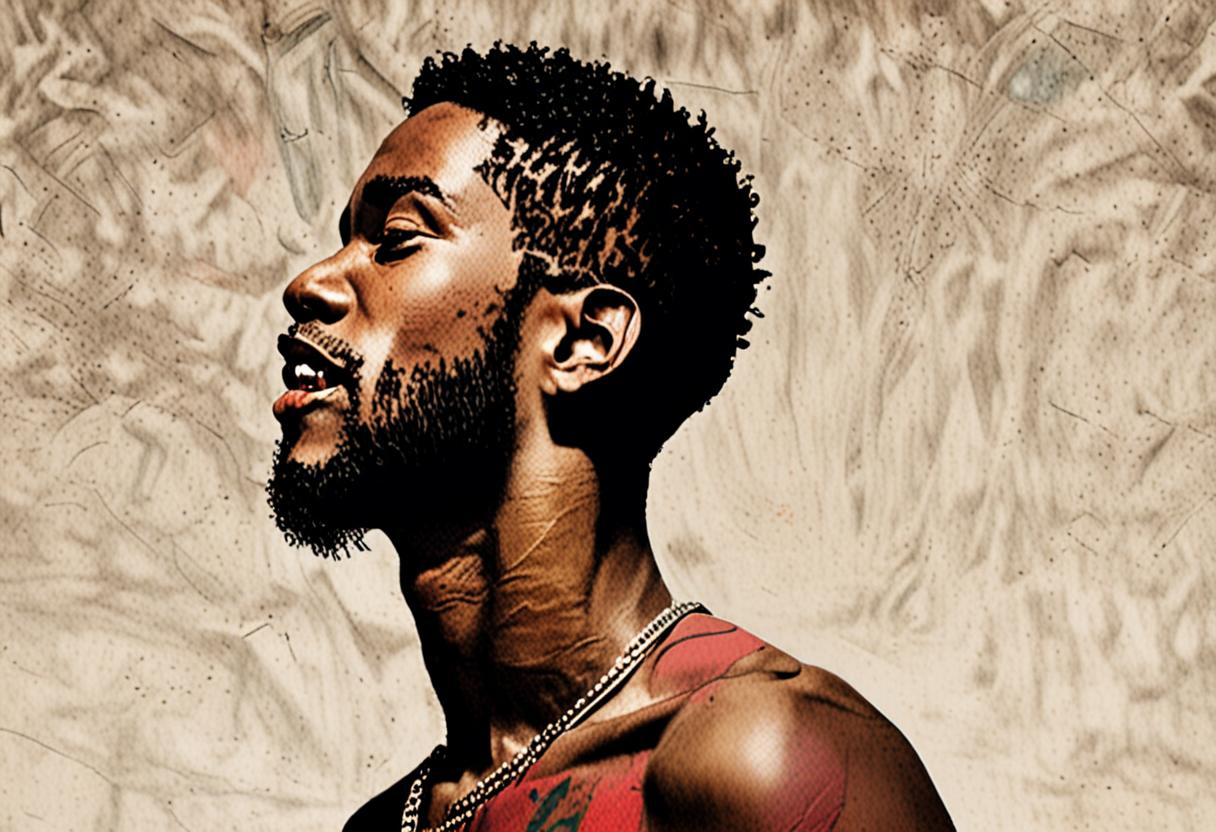
When Passion, Pain & Demon Slayin’ landed in December 2016, it didn’t feel like just another release in Kid Cudi’s catalogue—it felt like a recalibration of identity.
A quiet correction.
A return to the center of gravity he had been orbiting for years.
For an artist whose career had already redrawn the emotional vocabulary of rap, this album marked a decisive moment: the sound of someone who had walked through fire, survived his own implosions, and found enough clarity to sculpt a new chapter with steady hands.
Cudi had struggled publicly in the years leading up to the record—mental health battles, fractured collaborations, a creative direction that often felt pulled apart by expectations and self-doubt.
Passion, Pain & Demon Slayin’ is the opposite of that fragmentation: smooth, expansive, psychedelic, yet grounded by a kind of spiritual calm he had never articulated so clearly.
It’s a re-entry into orbit.
A Psychedelic Rap Reconstruction
Where earlier classics (Man on the Moon, Indicud) fused loneliness, euphoria, and cosmic anxieties, here the palette is different: deeper synth washes, elongated spaces, production that feels like a slow inhale in a dimly lit room.
The album stretches beyond rap’s structural expectations, flirting with alt-rock atmospheres, dream-pop textures, and the neon soul he helped normalize for an entire generation.
Tracks bleed into each other like chapters in a long, nocturnal monologue.
His voice—half rap, half incantation—moves between exhaustion and lightness, often in the same verse.
It’s less about delivering bars and more about sculpting an emotional environment.
The psychedelic dimension isn’t decoration. It’s the architecture.
The Collaborations: Not Features, but Anchors
André 3000’s fingerprints across the album are delicate but unmistakably vital.
His synergy with Cudi bends the project into a surreal, melodic space, as if two parallel universes briefly collided and decided to harmonize.
Producers like Plain Pat and Mike Dean restore the sonic chemistry of Cudi’s formative years—warm, atmospheric, imperfect in the right ways.
They don’t compete with him; they elevate him.
The result is a record that breathes.
The Heart of the Album: A Man Speaking Plainly
For all its swirling electronics and cosmic overtones, the core of the album is startlingly human.
Cudi doesn’t hide the fractures—he names them.
He doesn’t mythologize depression—he dismantles it.
He doesn’t posture—he confesses.
This vulnerability is why the album matters.
Not because it redefined his career, but because it clarified his essence:
Kid Cudi is at his most powerful when he stops performing for the world and starts addressing the listener as a companion lost in the same maze.
Passion, Pain & Demon Slayin’ is him leaving breadcrumbs for anyone who needs them.
Legacy: A Quiet Giant in the Hip-Hop Canon
The record didn’t explode on the charts, but it didn’t need to.
Its influence seeped into the DNA of modern hip-hop—particularly the atmospheric, introspective branch occupied by Trippie Redd, Juice WRLD, Post Malone, and a whole wave of artists who grew up thinking, If Cudi can say it out loud, maybe I can too.
In 2016, it landed like a soft meteor: not destructive, but illuminating.
Today, it stands as one of his most emotionally coherent projects—a testament that healing isn’t linear, but art can be a map.