
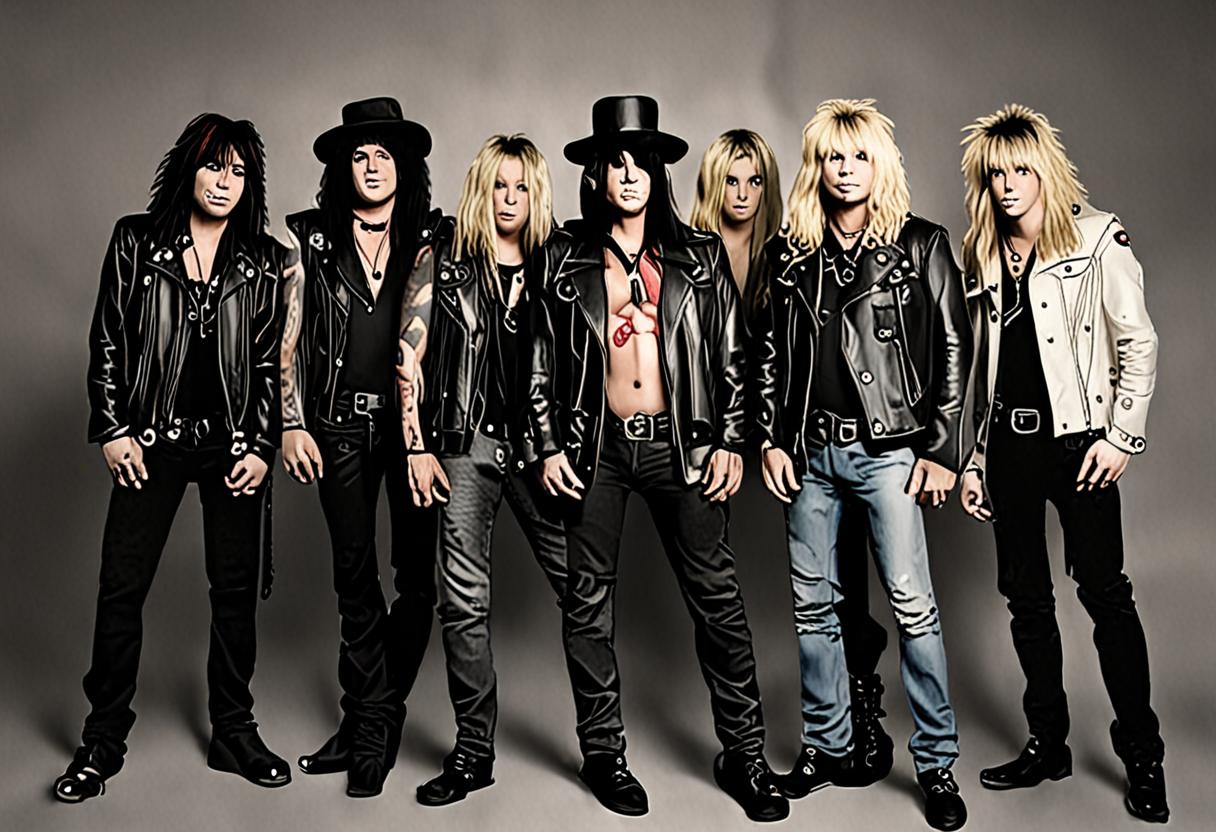
In the heart of Los Angeles, 1981, a seismic shift in the rock landscape was underway. Bassist Nikki Sixx and drummer Tommy Lee, both brimming with raw energy and ambition, joined forces to create a band that would soon become synonymous with the excesses and electrifying performances of the glam metal era. Their collaboration led them to guitarist Mick Mars, whose gritty riffs added a distinctive edge to their sound. The lineup was solidified with the addition of charismatic frontman Vince Neil, whose vocals would become a defining feature of the band’s identity.
Early Days and Meteoric Rise
Mötley Crüe’s debut album, *Too Fast for Love*, released in 1981, was a raw and unpolished gem that captured the rebellious spirit of the time. The album’s success laid the groundwork for their breakthrough with *Shout at the Devil* in 1983, an album that not only showcased their musical prowess but also solidified their image as the bad boys of rock. Tracks like “Looks That Kill” and “Too Young to Fall in Love” became anthems for a generation seeking an outlet for their youthful angst. Their subsequent albums, *Theatre of Pain* (1985) and *Girls, Girls, Girls* (1987), continued to push the boundaries of rock music, both sonically and thematically. The band’s penchant for hedonistic lifestyles was mirrored in their music, resonating with fans worldwide. However, it was *Dr. Feelgood* (1989) that marked a pinnacle in their career, achieving critical acclaim and commercial success, with the title track becoming one of their most iconic songs.
Trials, Tribulations, and Triumphs
The journey of Mötley Crüe was not without its challenges. The early ’90s saw the departure of Vince Neil, leading to the recruitment of John Corabi as the new vocalist. This lineup released the self-titled album *Mötley Crüe* in 1994, which, despite showcasing a heavier and more mature sound, received mixed reactions from fans and critics alike. The mid-’90s were a tumultuous period, with internal conflicts and changing musical landscapes testing the band’s resilience. In 1997, Neil returned to the fold, and the band released *Generation Swine*, an album that attempted to modernize their sound but struggled to capture the magic of their earlier works. The turn of the millennium saw the release of *New Tattoo* (2000), followed by a period of relative inactivity. However, the Crüe’s story was far from over.
The Dirt and Resurgence
The 2019 release of the Netflix biopic *The Dirt*, based on the band’s autobiography, reignited interest in Mötley Crüe. The film offered an unfiltered look into their rise, fall, and resurrection, introducing their legacy to a new generation. The accompanying soundtrack featured new tracks, proving that the band’s creative fire was still burning. In 2022, Mötley Crüe embarked on a co-headlining North American stadium tour with Def Leppard, marking their first major tour in seven years. The tour was a testament to their enduring appeal, with fans old and new flocking to witness the spectacle that only Mötley Crüe can deliver.
Looking Ahead
As of 2023, the band continues to tour with guitarist John 5, following Mick Mars’ retirement from touring due to health issues. Their ability to adapt and persevere through decades of change speaks volumes about their dedication to their craft and their fans. Mötley Crüe’s journey is a rollercoaster of highs and lows, excess and redemption. Their music, characterized by raw energy and unapologetic lyrics, has left an indelible mark on the rock genre. As they continue to perform and inspire, one thing remains clear: Mötley Crüe’s legacy is as enduring as the anthems they’ve gifted to the world.