
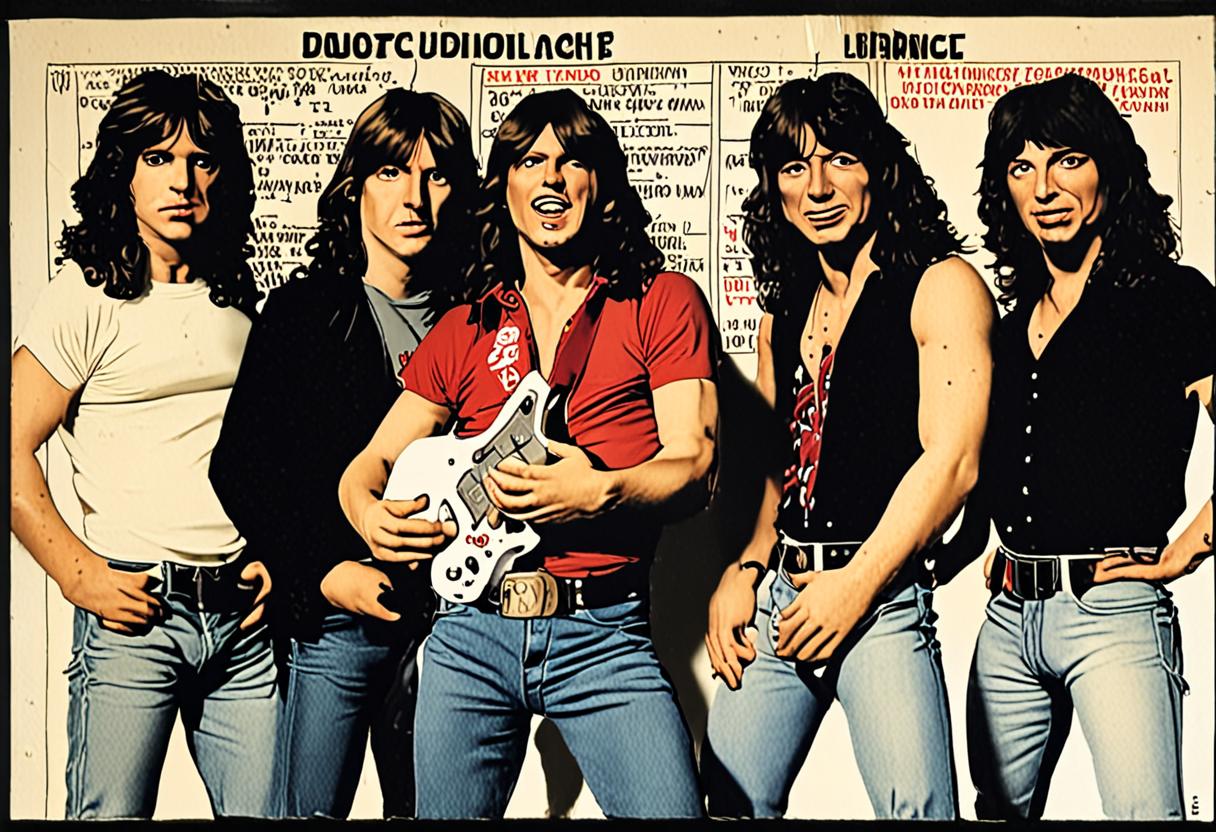
A spark, a scream, a beginning that refused to sound like one.
When AC/DC released the original High Voltage in Australia on December 7, 1974, the world didn’t stop — but something irreversible started. It wasn’t the globally recognized 1976 version, polished and re-assembled for international ears. This first High Voltage was something else entirely: a raw, surging blueprint of a band that hadn’t yet learned how to compromise — and never truly would.
You can hear the youth immediately. Angus Young, barely out of school, already playing like someone who’d spent a lifetime on stage. Malcolm Young, the quiet architect, holding everything together with iron rhythm and a work ethic that would later define the group’s mythology. And then there was Bon Scott — swaggering, dangerous, and impossibly charismatic — a man who sounded as if he’d lived ten different lives before stepping behind the microphone.
This High Voltage doesn’t pretend.
It doesn’t posture.
It charges.
The album is loose, sweaty, and imperfect in a way that only true beginnings can be. Its riffs don’t yet carry the weight of stadiums; its grooves haven’t been sharpened into the anthemic precision AC/DC would later master. But that’s exactly why it matters: it captures the moment before the legend forms, when instinct is louder than intention.
Songs like “Soul Stripper” and “Baby, Please Don’t Go” pulse with a kind of reckless urgency — the feeling of a band testing the voltage of its own identity. There’s humor, grit, and a stubborn refusal to sound like anyone else. Even in this early phase, AC/DC weren’t trying to invent a genre; they were simply playing the only way they knew how. And accidentally, they ended up forging a sound that would define hard rock for decades.
Listening today, the album doesn’t feel dated.
It feels alive — a spark preserved.
Every great band has a point of origin, but few have one as unmistakably theirs as this. The original High Voltage isn’t just a debut album; it’s the ignition of a lifelong current. A declaration that volume, attitude, and groove — when welded together — can become more than style. They can become identity.
This is where AC/DC begin.
Not with polish, not with perfection, but with pure electrical intent.
And that current is still running.