
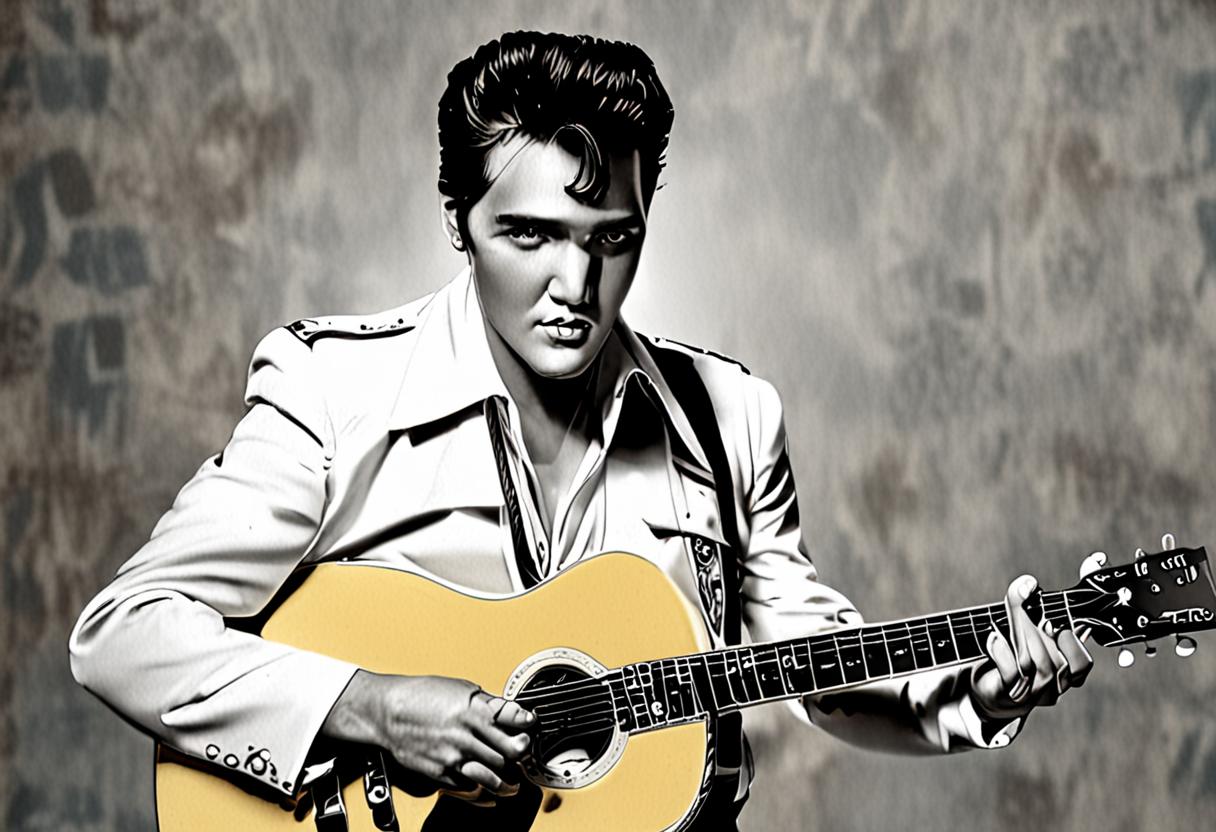
On January 8, 1935, in the modest town of Tupelo, Mississippi, a legend was born. Elvis Aaron Presley, a name that would become synonymous with the very essence of rock and roll, began his journey in humble surroundings. Today, as we commemorate what would have been his 91st birthday, we delve into the life, music, and indelible impact of the King.
Career Highlights
Elvis’s meteoric rise began in 1954 when he recorded “That’s All Right” at Sun Studio in Memphis. This fusion of country melodies and blues rhythms captivated audiences, marking the dawn of a new musical era. By 1956, “Heartbreak Hotel” topped the charts, solidifying his status as a national sensation. His dynamic performances on television shows like “The Ed Sullivan Show” showcased his charismatic stage presence and unique dance moves, which became his signature.
Throughout the 1960s, Elvis expanded his artistic horizons by starring in 31 films, including classics like “Blue Hawaii” and “Viva Las Vegas.” Despite mixed critical reception, these films were commercially successful and further cemented his place in popular culture. After a period focused on filmmaking, Elvis made a triumphant return to live music with his 1968 “Comeback Special,” a televised event that reminded the world of his unparalleled talent and stage presence.
Personal Journey
Born to Vernon and Gladys Presley, Elvis’s early life was marked by financial struggles. The family’s move to Memphis in 1948 exposed him to a rich tapestry of musical influences, from gospel to blues, shaping his eclectic sound. His deep connection to gospel music remained a constant throughout his life, influencing his vocal style and emotional delivery.
Elvis’s personal life was as public as his professional one. His marriage to Priscilla Presley in 1967 and the birth of their daughter, Lisa Marie, in 1968, were widely covered by the media. Despite his immense fame, Elvis faced personal challenges, including health issues and the pressures of stardom, which ultimately led to his untimely death in 1977 at the age of 42.
Cultural Impact
Elvis’s influence transcended music, reshaping fashion, language, and societal norms. His fusion of African-American blues and white country music broke racial barriers, bringing diverse musical styles to mainstream audiences. As Leonard Bernstein once noted, “Elvis Presley is the greatest cultural force in the 20th century.” His style and persona challenged the conservative norms of the 1950s, paving the way for the cultural revolutions of the 1960s and beyond.
Decades after his passing, Elvis’s legacy endures. Graceland, his Memphis home, attracts over 600,000 visitors annually, serving as a testament to his lasting impact. His music continues to inspire artists across genres, and his story has been retold in numerous films and documentaries, including the recent biopic directed by Baz Luhrmann.
As we celebrate Elvis Presley’s birthday, we honor not just the man, but the monumental shift he brought to music and culture. His voice, style, and spirit remain timeless, reminding us of the power of innovation and authenticity in art.