
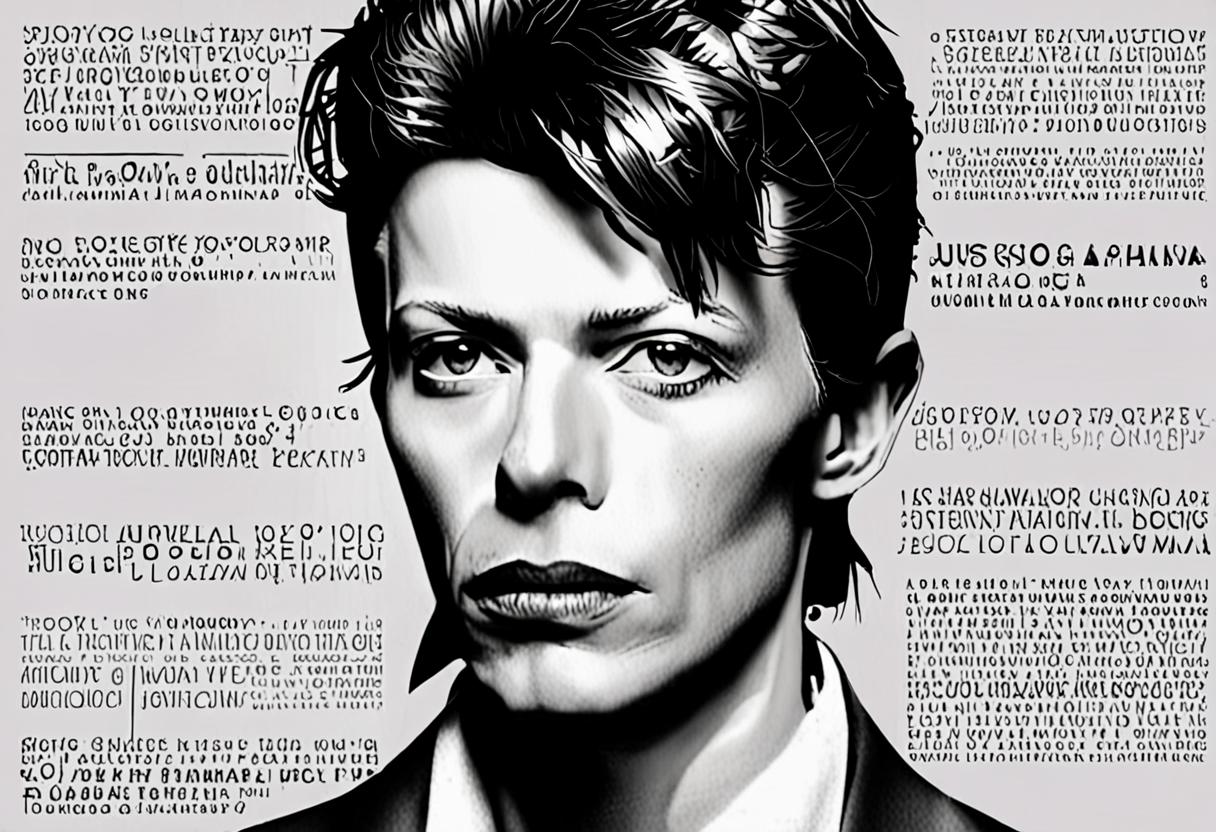
On January 8, 1947, in the vibrant district of Brixton, London, David Robert Jones was born—a man who would later become known to the world as David Bowie. As we commemorate what would have been his 79th birthday, it’s an opportune moment to delve into the life of an artist whose chameleonic transformations left an indelible mark on the cultural landscape.
Career Highlights
Bowie’s musical odyssey began in the 1960s, but it was the 1970s that saw him ascend to stardom. His 1969 single “Space Oddity” introduced audiences to Major Tom, a character that would recur throughout his career. This track not only showcased his knack for storytelling but also his ability to tap into the zeitgeist, coinciding with the Apollo 11 moon landing.
The early ’70s saw the birth of Ziggy Stardust, an androgynous alien rock star, through the album “The Rise and Fall of Ziggy Stardust and the Spiders from Mars” (1972). This persona blurred the lines between performer and character, challenging societal norms and captivating audiences worldwide. The album’s success solidified Bowie’s reputation as a pioneer of glam rock.
Never one to remain static, Bowie ventured into soul and funk with “Young Americans” (1975), producing the hit “Fame,” co-written with John Lennon. This period also introduced the enigmatic Thin White Duke during the “Station to Station” era, reflecting his struggles and artistic evolution.
The late ’70s marked Bowie’s Berlin Trilogy—”Low” (1977), “Heroes” (1977), and “Lodger” (1979)—created in collaboration with Brian Eno. These albums delved into experimental sounds, blending electronic music with ambient textures, and are often hailed as some of his most innovative work.
In the 1980s, Bowie achieved commercial success with “Let’s Dance” (1983), bringing hits like “Modern Love” and “China Girl” to the forefront. His ability to adapt to the changing musical landscape while maintaining artistic integrity was unparalleled.
Personal Journey
Beyond his musical endeavors, Bowie’s personal life was a tapestry of experiences that influenced his art. His early years in Brixton and later in Bromley provided a backdrop to his formative years. Notably, his childhood home in Bromley is set to open to the public in 2027, offering fans a glimpse into his early life.
Bowie’s relationships also played a significant role in his journey. His marriage to Angela Barnett in 1970 brought forth his son, Duncan Jones, who would later become a renowned filmmaker. In 1992, Bowie married supermodel Iman, with whom he had a daughter, Alexandria “Lexi” Zahra Jones. Their union was a testament to a deep and enduring love, often highlighted in interviews and public appearances.
Cultural Impact
David Bowie’s influence transcended music. He was a fashion icon, known for his bold and often avant-garde style choices. His personas, from Ziggy Stardust to the Thin White Duke, challenged traditional notions of gender and identity, paving the way for future artists to explore and express their authentic selves.
His impact on the arts is evident in the establishment of the David Bowie Centre for the Study of Performing Arts at the Victoria & Albert Museum in London. Set to open in 2025, the center will house over 80,000 items from Bowie’s archive, including costumes, instruments, and personal notes, offering an in-depth look into his creative process.
Even cities have paid homage to his legacy. In 2024, Paris named a street “rue David-Bowie” in his honor, recognizing his contributions to music and culture.
Reflecting on his own artistry, Bowie once remarked, “I always had a repulsive need to be something more than human.” This relentless pursuit of reinvention and exploration defined his career and continues to inspire countless artists and fans alike.
As we celebrate David Bowie’s birthday, we honor not just the man, but the myriad personas, sounds, and visions he gifted to the world. His legacy is a testament to the power of transformation and the enduring impact of true artistry.