
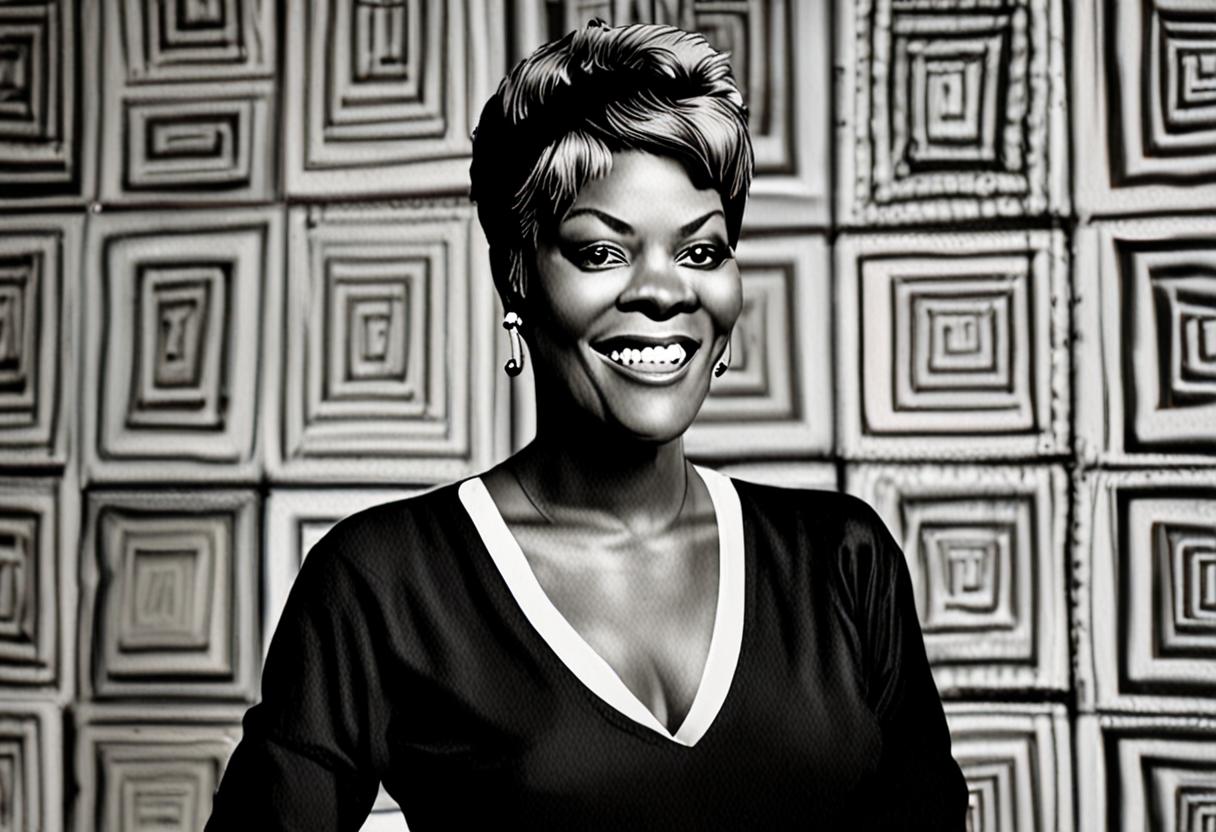
Few artists in American music have shaped the emotional vocabulary of generations the way Dionne Warwick has. Born Marie Dionne Warrick in 1940, she grew up surrounded by gospel harmonies in New Jersey, a childhood that became the foundation for one of the smoothest and most sophisticated voices of the 20th century. Warwick didn’t chase spotlight drama or stylistic excess — she mastered poise, diction, and emotional clarity. That restraint became her signature superpower.
By the early 1960s, her partnership with Burt Bacharach and Hal David produced a catalog so foundational that it feels woven directly into the DNA of pop and soul:
“Walk On By,” “Say a Little Prayer,” “Anyone Who Had a Heart,” “Do You Know the Way to San Jose?”
These weren’t just hits — they formed the blueprint for adult contemporary elegance, a genre that hardly existed before she defined it.
A Career That Survived Trends, Tides, and Entire Eras
Warwick’s brilliance lies in something rarely appreciated: longevity through evolution without bending to fashion.
The British Invasion didn’t drown her.
Disco didn’t erase her.
The MTV age didn’t intimidate her.
She simply sang — clearly, sincerely, with interpretive intelligence.
Her 1980s revival, especially with “That’s What Friends Are For,” showed that Warwick wasn’t just a voice of a past era — she was a cultural connector, able to bring artists and audiences together across generations.
The Christmas Connection: Why December Belongs to Her
There’s a reason her voice resurfaces so powerfully every year as the lights go up and playlists switch into winter mode. Warwick’s delivery — warm, steady, unforced — fits Christmas the way Nat King Cole fits a fireplace or Karen Carpenter fits snowfall.
She doesn’t oversing.
She doesn’t perform Christmas.
She embodies it.
Songs like “The Christmas Song,” “Silver Bells,” “Silent Night,” and her many holiday appearances across TV specials and charity concerts created an emotional association that still resonates. Her tone carries a softness that feels like a memory — winter nostalgia in human form.
A Legacy That Modern Artists Quietly Lean On
Ariana Grande, Sam Smith, Alicia Keys, Florence Welch — the lineages of vocal finesse and interpretive nuance all trace back to Warwick’s approach. She is, in many ways, the bridge between Ella Fitzgerald and modern pop phrasing.
In the industry, she’s also remembered as one of the first major Black female artists to carve out a consistent, international presence without being boxed into stereotypes or gimmicks. There’s activism in that elegance.
Why Dionne Still Matters in 2025
When we talk about giants of the Christmas season — Mariah Carey’s dominance, Michael Bublé’s seasonal takeover — it’s easy to forget the structural work that made the “holiday standards” era possible. Warwick kept the Great American Songbook alive through decades when pop was mutating at warp speed.
Her voice stabilized the culture.
Her phrasing became a reference point.
Her tone — that feather-light, still, dignified glow — gives December its color.
At 85, Dionne Warwick stands not only as a living legend but as a reminder that music’s greatest power is simplicity rooted in truth. She didn’t turn herself into a spectacle. She didn’t need to. The voice was enough.
And during the holiday season — it’s still more than enough.