
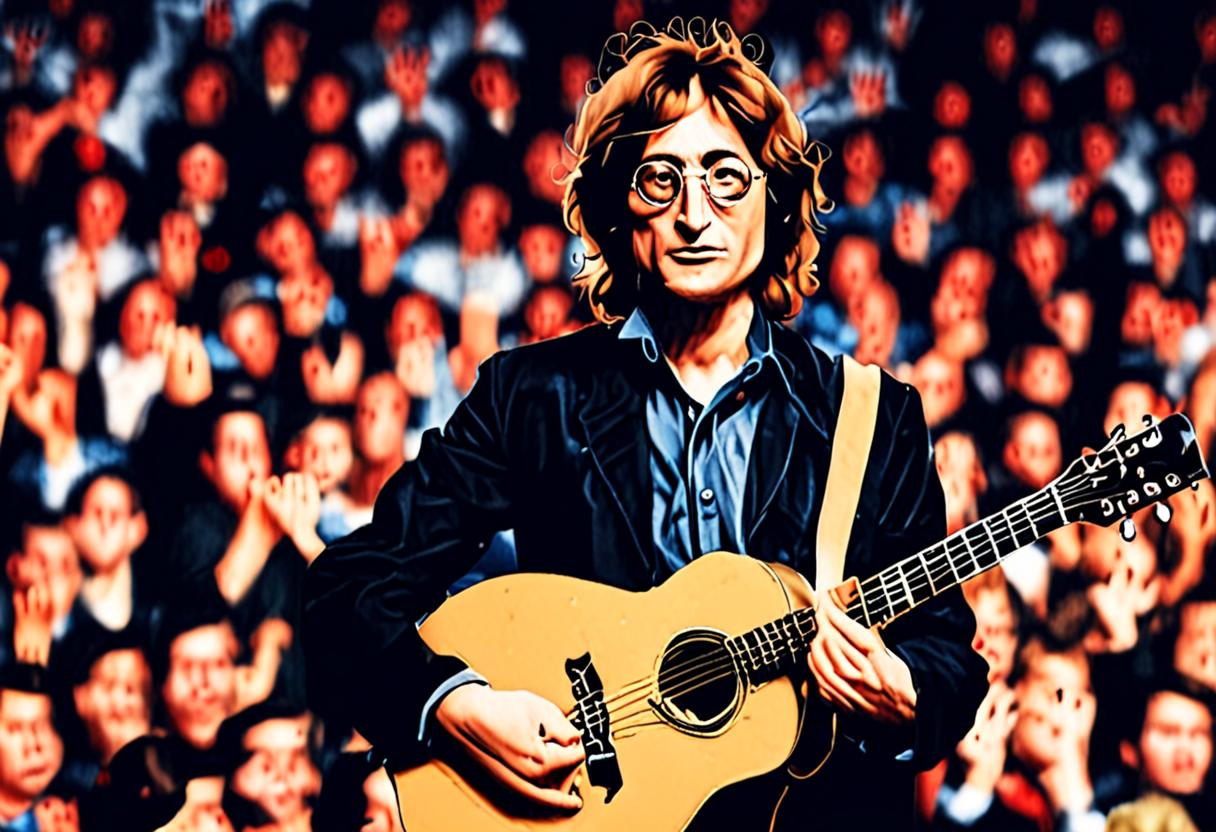
There are nights in music history that feel too heavy to belong to the real world, nights that fracture the timeline into a before and an after.
December 8, 1980, is one of them.
Shortly before 11 p.m., John Lennon—just forty years old, newly returned to public life and creative momentum—was shot outside his home at the Dakota in New York City. The news spread with a speed that felt unreal even for that era, carried through radio flashes, late-night TV bulletins, and the shaken voices of DJs who suddenly found themselves narrating the unthinkable.
Within minutes, the world changed.
A Return That Felt Like a Beginning
Lennon had just released Double Fantasy, an album built around renewal: domestic peace, fatherhood, artistic rebirth.
For the first time in years, he seemed to be stepping back into the spotlight not with provocation, but with clarity.
Fans saw him walking around Manhattan like a regular citizen—signing autographs, laughing with Yoko, pushing a stroller through Central Park.
Nobody imagined that accessibility would become part of the tragedy.
The Moment the News Broke
Sportscaster Howard Cosell delivered the announcement live during a football game, interrupting the broadcast in a tone that trembled between disbelief and duty:
“John Lennon… pronounced dead on arrival.”
Millions heard those words at the same time.
Millions froze.
Across New York, people poured into the streets holding radios and candles.
Across the UK, fans stayed awake until dawn waiting for confirmation that never should have existed.
Across the world, record stores opened early—not to sell products, but to give people a place to stand together.
It wasn’t just mourning. It was collective shock.
The Hole Left Behind
The Beatles had broken up long before, but Lennon’s death marked the true end of an era.
He wasn’t only a songwriter—he was a cultural compass, a figure whose contradictions, provocations, and vulnerable confessions helped define modern celebrity itself.
His absence feels strangely active:
a silence that pushes forward, a missing angle in every retrospective, a question mark in every “what if.”
What would the ’80s have been with Lennon evolving alongside Bowie and Prince?
What would Lennon have said about the digital age, mass culture, political polarization?
What albums were still inside him?
Those questions sting because they are unanswerable, and because his final works suggested he still had entire realms left to explore.
The Fans’ Grief: Chaos, Quiet, and Unresolved Love
Reports from that night describe:
- people openly sobbing in Times Square;
- fans collapsing outside the Dakota in total disbelief;
- strangers forming spontaneous vigils without speaking;
- record-store clerks comforting people they had never met.
Grief for an artist is rarely unanimous.
Lennon was one of the rare exceptions.
The weight of the news wasn’t just emotional—it felt cosmic, like a cultural axis had been knocked out of alignment.
The Legacy That Refuses to Dull
Forty-five years later, the shock has softened, but it has never evaporated.
Lennon’s music remains a reference point across genres; his artistic courage still inspires new generations; even the complexities of his life spark debate and re-evaluation.
But the strangest, most powerful truth is this:
Fans still speak about him as if he might walk back through the door.
That’s the mark of an artist whose presence was bigger than his era.