
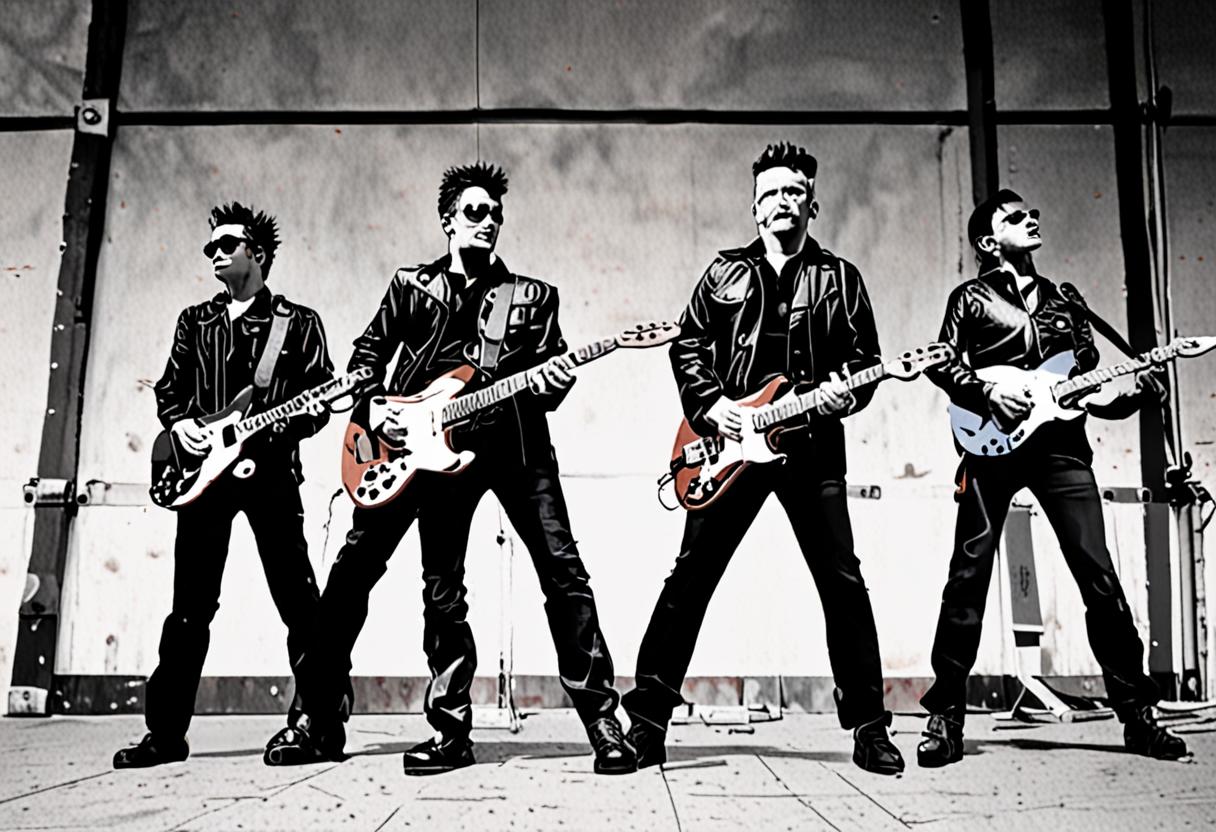
When Achtung Baby dominated the Billboard Rock Charts in December 1991, it wasn’t simply a commercial milestone — it was a shockwave. A fault line opening under the feet of every rock listener, critic, and band wondering what the future of the genre might look like.
And the truth is this: U2 didn’t just reinvent themselves. They reinvented rock’s entire vocabulary.
A Band on the Brink
By 1990, U2 were exhausted by their own mythology.
The grandeur of The Joshua Tree had turned them into the biggest band in the world, but it also boxed them in.
The moral sermons, the Americana obsession, the self-serious tone — none of it felt like a path forward.
During the Rattle and Hum backlash, the narrative was harsh and simple:
Huge band, too full of itself, artistically stuck.
So they did the unthinkable.
They tore themselves down so they could start again.
Berlin.
Hansa Studios.
Cold rooms, political upheaval, and a band almost collapsing under its own weight.
Then, from tension and near-breakup, came One.
A fragile moment of unity that became the spine of the entire project.
Choosing Risk Over Reputation
Nothing on Achtung Baby was safe.
Industrial grooves.
Distorted vocals.
A sensual, ironic, electronic edge that broke every expectation of what U2 “should” sound like.
“Zoo Station” was practically a manifesto.
“The Fly” reinvented Bono as a fractured, unreliable narrator.
“Until the End of the World” fused biblical imagery with dance-rock.
Every song pointed in a new direction.
This wasn’t reinvention — it was detonation.
Chart Domination Was the Result, Not the Goal
When the Billboard Rock Charts crowned Achtung Baby in December 1991, the message was clear:
Fans were ready for evolution.
Alternative culture was entering the mainstream.
A stadium band could be experimental without losing its audience.
This wasn’t nostalgia-driven success.
It was the triumph of reinvention.
A Legacy That Still Feels Contemporary
More than three decades later, Achtung Baby remains one of the rare albums that still sounds genuinely modern.
Its electronic textures seeped into pop.
Its fractured emotional tone foreshadowed the digital era.
Its ironic, self-aware aesthetic influenced everyone from Radiohead to Nine Inch Nails.
When Bono said, “We had to go away and dream it all up again,” they actually meant it — and they pulled it off.