
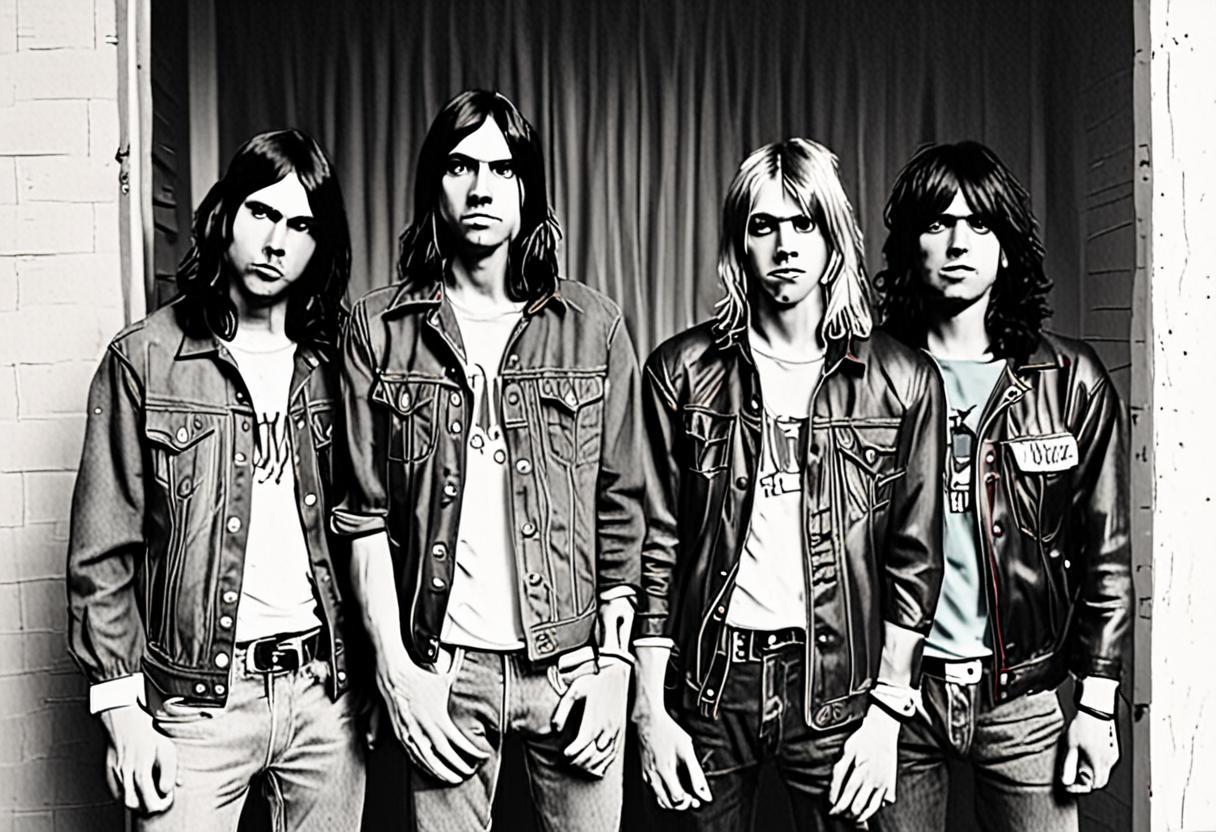
Released December 1991 — A Portrait of Nirvana Before the Myth Set in Stone
When Nirvana released Incesticide in December 1991, the world was still reeling from the nuclear blast of Nevermind. “Smells Like Teen Spirit” had rewritten the rules of youth culture, MTV, radio, fashion, and even industry economics.
But Incesticide—a compilation of demos, B-sides, radio sessions, and oddities—did something arguably more important:
It exposed who Nirvana really were beneath the hype.
Where Nevermind made them icons, Incesticide made them human.
Where Nevermind was a manifesto, Incesticide was a confession.
A Collection That Was Never Meant to Be Clean
The beauty of Incesticide is its lack of polish.
These tracks were not engineered for stadiums or chart dominance—they were simply moments Nirvana captured along the way.
And yet, those moments tell the truest story.
You hear the band’s punk backbone in “Dive” and “Hairspray Queen.”
You hear the Seattle underground in the raw Fecal Matter DNA of “Aneurysm.”
You hear Kurt’s melodic genius struggling to stay unfiltered in “Sliver,” a two-minute grenade of childhood memory and frustration.
There is no marketing strategy here.
No calculated emotional arc.
Just the unmistakable sound of three musicians who created because they couldn’t not create.
The Radio Sessions: Nirvana Before the Spotlight
Some of the most compelling recordings on the album come from Nirvana’s BBC sessions—performances that sit halfway between rehearsal and revelation.
Nirvana live on the radio were feral, playful, out of tune, transcendent, bored, explosive—sometimes all within the same track.
Incesticide captures that volatility before the mythology of “grunge” froze their image into something static.
The band is loose, sharp, sarcastic, and absolutely alive.
A Window Into Kurt Cobain’s Contradictions
What truly anchors Incesticide is Kurt’s voice—not just his literal singing, but the personality leaking through every lyric, scream, and sideways experiment.
Here is Kurt the indie geek.
Kurt the noise enthusiast.
Kurt the soft melodist.
Kurt the mischief-maker.
Kurt the wounded kid who turned trauma into texture.
Incesticide shows the multiplicity the mainstream was too slow to understand.
It is the antidote to the idea of Nirvana as a one-dimensional angst machine.
And for fans, that alone makes it sacred.
The Album as Act of Reclamation
There’s an underrated detail: Incesticide was partly a way for the band to regain control of rare material circulating unofficially.
Releasing these tracks formally was a statement:
“If the world is going to listen to us, it should at least hear us on our terms.”
It’s a punk move disguised as a compilation.
Why Incesticide Still Resonates
For many listeners, this is the Nirvana album they return to when the nostalgia evaporates and the myth feels heavy.
It’s the record where you hear:
- Kurt laughing at the absurdity of fame
- Krist bending melody into chaos
- Dave hitting drums like he’s trying to break time open
It’s Nirvana without the weight of being Nirvana.
And that’s why it still matters.
Because Nevermind was the explosion, but Incesticide is the evidence.
The document.
The portrait of a band that didn’t know they were changing the world—only that they were trying to survive inside their own heads.
More than 30 years later, Incesticide remains the most intimate place to meet them.